Mediation for inheritance disputes and estate planning

An inheritance affects not only assets and legal rights, but also the relationships within a family. I help heirs and people planning their estates find an arrangement that everyone involved can stand behind.

In Berlin and online – including for families who live far apart.

Schedule a free introductory call

up to 20 minutes by phone or Zoom
Email me at paul@erbmediation-berlin.de or call me: +49 151 25232844

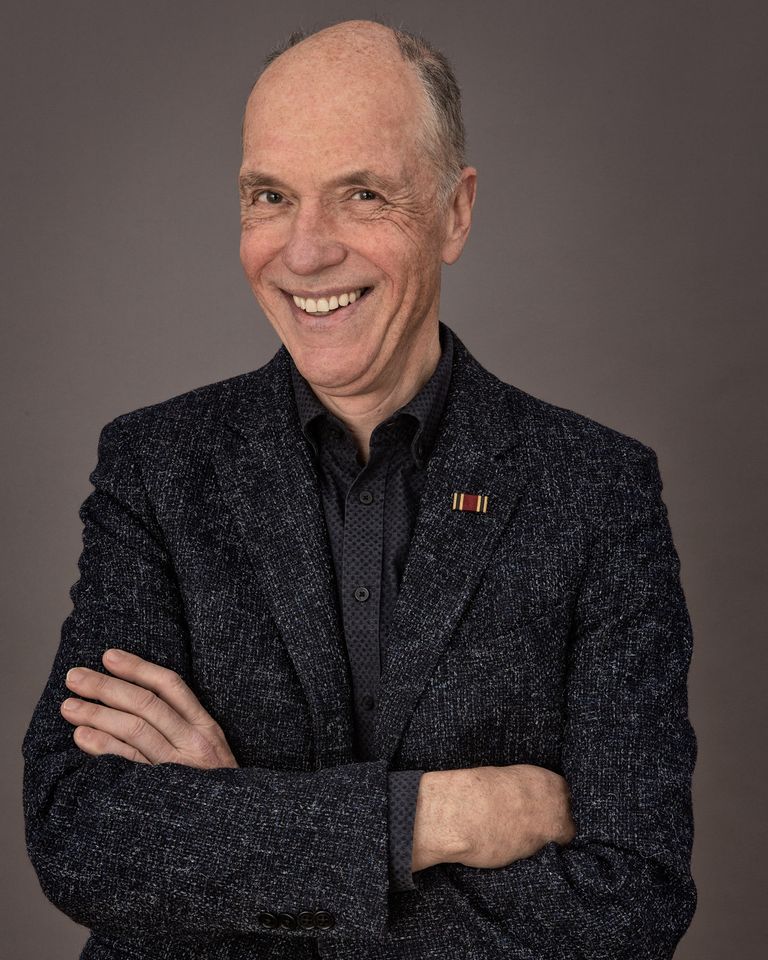
Portrait of Christoph C. Paul
Christoph C. Paul · Retired German notary · Mediator since 1996

Typical situations:

  • Siblings cannot agree on how to divide the inheritance – and it is about more than money.
  • One heir wants to keep the family home, and the others would be bought out. But at what value?
  • Children and a second wife or husband have to come to an agreement about the estate.
  • A forced share (Pflichtteil), a right of residence (Wohnrecht) or a will feels unfair.
  • Parents want to plan their estate and do not know how to talk to their children about it.

My approach

When someone dies, unresolved or hidden relationship issues often resurface. They get in the way of resolving the questions among heirs, those entitled to a forced share, beneficiaries of a bequest (Vermächtnis) and executors (Testamentsvollstrecker). At the same time, inheritance shares, wills and inheritance contracts (Erbverträge) set the legal framework for dividing the estate among the heirs (Erbauseinandersetzung).

Mediation has room for both. As a German notary (Notar), I handled estate arrangements and real estate transfers for more than thirty years; as a mediator, I have worked with families since 1996. Unlike a lawyer, I do not represent either side and I do not advise the parties. I can, however, place proposed solutions in their legal context. If you wish, the emotional questions can also be addressed – with the aim of a solution that works for everyone involved.

Inheritance mediation can take place after a death, to settle the estate, or before, to work out an estate plan together with the future heirs.

From my practice

The following cases have been anonymized.

  • Inheritance dispute between siblings

    A brother and sister agree that their parents’ house should be sold. But before the proceeds are divided, each of them presents a bill: the sister’s expensive years at boarding school, the years she spent caring for their father. In the second session, it becomes clear what is really at stake.

    Read the full caseShow less

    The brother and sister came to the scheduled session together. The warmth between them prompted me to ask why they had come to me instead of simply talking things over at home or in a café. It quickly became clear that there were considerable tensions behind the sibling façade. They agreed that their parents’ house in eastern Holstein should be sold after their father’s death. But before the proceeds could be split in half, there were a few things to settle.

    The brother reproached his sister for having spent two expensive years at a boarding school in England, while he had only attended the public school in Holstein. The sister, for her part, calculated the financial sacrifices she had made by visiting their father, who had dementia, more than once a month for six years and organizing his care on her own. Both siblings were good with numbers and presented me with complicated calculations meant to establish fairness. It was clear to me that these calculations would lead to a compromise only on the surface. So I offered them a second session.

    The chance to let everything sink in was evidently just right. In the second session, I was able to shift the focus to the dynamics between the siblings. We talked about their different relationships with their mother, who had died earlier and whose death had hardly been discussed because of the worries about their father. Misunderstandings were cleared up and disappointments were voiced. Once again I turned the focus to the warmth between them that had been visible at the outset, which both saw as a great treasure now that their parents had died. In the end, the siblings agreed to set aside time for a personal conversation on the first weekend of every month; for the time being, they decided not to pursue the financial compensation they had calculated. Everything else, they said, was well on its way, and they would manage the rest on their own.
  • Dispute over the family home

    Three siblings inherit in equal shares, and the eldest sister wants to take over the house. The question is which value should apply: a real estate agent’s estimate, an appraisal or the official standard land value (Bodenrichtwert). A point no one had thought of at first opens the way to an agreement.

    Read the full caseShow less

    The three siblings had been named heirs in equal shares. At the same time, their late parents had appointed the elder daughter as executor of the will. Originally, they had all wanted to sell the house, but now the elder daughter had decided to take it over and buy out her siblings. They came to me for mediation to ensure a fair settlement. Several real estate agents had already been asked for an estimate. The elder daughter believed that agents would put too high a value on it anyway. If an expert appraisal were commissioned, the question would remain who would bear the costs and how binding it would be.

    I asked what a fair and just arrangement might look like and collected the answers on the flip chart: all three get the same amount; an average of the agents’ estimates; the much lower official standard land value should be decisive; the house itself is not the value, only the land; could an appraiser be asked for an inexpensive short appraisal, and what if no one liked the result? And another new issue came up: if the elder daughter acquired the house as part of the division of the estate, she would save the real estate transfer tax of 6 percent, whereas the other two siblings would have to pay it when buying property of their own; that was unfair. I picked up this new argument and had the siblings calculate a saving of about €45,000. After an hour and a half, we took a break, and I suggested a walk around the neighborhood of the mediation room.

    When the mediation resumed, the elder daughter proposed that she would gladly pay each of her siblings a third of the calculated €45,000 if the lowest of the three agents’ estimates were used as the basis for the payout. The youngest sister agreed immediately; the middle brother asked for time to think it over. This took the pressure off everyone. I offered them a further session if needed. A good month later, I received an email saying that they had agreed on the approach we had outlined together.

  • Community of heirs (Erbengemeinschaft) and a second marriage

    Two daughters inherit their father’s house; his second wife receives a lifelong right of residence – and wants her forced share instead. Over three sessions, it becomes clear that this is about more than numbers. A fourth chair for the deceased brings the turning point.

    Read the full caseShow less

    The first contact came through the two daughters of a recently deceased father. They had inherited the large house in which their father’s second wife lived and in which, according to his will, she was to continue living. Since she had inherited nothing apart from the right of residence, the contents of the house and some cash, the wife had sought legal advice and now wanted to claim her statutory forced share. I offered a first joint session of two full hours to work out, together with all three parties, what each of them wanted from the inheritance.

    In this first session, it soon became clear that apart from the financial claims, the relationships were also at stake – both with the late father and husband and among the three parties. The wife was deeply hurt that her husband had left her “only” the right of residence, while the house she loved and had looked after for the past 15 years went to the two daughters. The daughters, both in their late thirties, agreed that they “couldn’t do anything” with the house as long as their father’s second wife was living in it. They were glad that she had cared for their father so devotedly in the last years before his death, when he had needed care. Years earlier, both had discussed with their father that the house should be sold after his death and that this would give each of them a solid foundation for buying an apartment. After this first session, we scheduled two more sessions, two weeks apart. I asked both daughters to seek legal advice as well.

    In the second session, the two sisters first explained what they had learned from their lawyer: either the wife would make use of the lifelong right of residence granted to her in the will, or she would disclaim the inheritance and then receive the forced share, namely a quarter of the estate, but without the right of residence. Working from this premise, I went through the various scenarios with the three parties: how to value the estate, the wife having to move out if she claimed the forced share, and so on. She faced a real dilemma: moving out of the house with money in the bank, or staying in the house she loved, but then without a share of the estate. The daughters were unsure as well: even after paying the forced share, they would still keep most of the estate; but they did not feel entirely comfortable with the idea that the second wife, who had cared for their father so devotedly and given him a wonderful retirement, should now move out. They would of course have to sell the house, both to pay the forced share and to buy something of their own. At the end of the second session, I brought in a fourth chair and asked the three of them to imagine that the late father and husband was sitting there: what would he advise them to do?

    Bringing in the deceased evidently gave them something to think about. The daughters opened the third and final session with a proposal: they had roughly estimated how large the quarter of the estate was that the wife would be entitled to as her forced share. If she stayed in the house for another five years, they would both be willing to pay her an amount, still to be determined, after she moved out. A surprised smile crossed the wife’s face when she heard this offer. She had been thinking of a similar solution herself. Agreement on the amount to be paid after she moved out now came quickly. Finally, the parties also set out the next steps: going to a notary to have the agreement notarized, and the details of the right of residence for the coming five years.

  • Planning ahead – mediation before an inheritance

    A couple in their late seventies want to divide their estate fairly between two children who live in very different circumstances. The parents had never talked to their children about it. Over two sessions, silence turns into a shared plan.

    Read the full caseShow less

    They wanted to come to me for just one session; their concern was to ensure fairness between their children when the time came. Both were in their late seventies, had a comfortable retirement income and a large condominium with a garden in one of Berlin’s best neighborhoods. They now wanted to make a will naming each other as heirs first and, after the death of the surviving spouse, their two children as heirs in equal halves. What was unclear, however, was what equal halves should mean given lifetime gifts to their daughter, different education costs and, above all, their children’s financial prospects. The daughter lived in very modest circumstances and was a single mother of a child with a disability. The son was a well-paid hospital department head whose wife came from a wealthy family. The parents said they had never dared to discuss this topic with their children. Could I help them do so?

    The parents then came to the second session with both children. The mood was tense at first. I began by asking what fairness meant to them in connection with the inheritance. I collected their ideas on the flip chart, offered hesitantly at first, then more and more animatedly. It quickly became clear that both children wanted their different financial outlooks to be the basis for a fair arrangement. Lifetime gifts and education costs did not appear on the flip chart; the long-term care of the grandchild with a disability, however, was raised by everyone. The siblings emphasized that they would only feel comfortable if they both inherited the same amount. At the same time, the son came up with the idea that the parents might set up an ETF savings plan for the grandchild to provide long-term security; as a doctor, he knew that there were also good ways to safeguard this with regard to the disability and any public benefits. And the parents could do whatever they wanted with their pensions.

    At the end of the second session, I summarized the outcome of our discussions, agreed on the next steps with everyone and asked for feedback. The initial silence about the inheritance had been transformed into a creative process. “If only we had come to you sooner” and “We imagined the conversation about settling the inheritance would be much harder” – that was the feedback from parents and children.

  • An inheritance conflict between the US and Germany

    Three siblings who live in the US inherit their father’s apartment in Berlin. Shortly before his death, he left a young neighbor a lifelong right of residence. The heirs suspect she obtained it by deception – until a simple question changes the conversation.

    Read the full caseShow less

    A Berlin lawyer contacted me. He represented the three adult children of an American who had recently died. Some years earlier, after his wife’s death, the father had moved from the US to Berlin to spend his retirement in the hometown of his ancestors. Here he had bought a small condominium, which the heirs now wanted to sell. Shortly before his death, however, he had left a neighbor in the same building a lifelong, rent-free right of residence in a notarized will. The children wanted to do everything they could to overturn this bequest. The lawyer had reviewed the will: the right of residence was valid. Perhaps, he suggested, mediation was the right way to develop solutions.

    I contacted all parties by email, had them sign a mediation agreement and began with a Zoom meeting with the three siblings. They accused the neighbor, who was more than 50 years younger than their father, of having obtained the right of residence by deception and taken advantage of his weakness. If necessary, they wanted to settle the matter in court. I changed the subject and asked what their father had actually been looking for in Berlin. The eldest daughter, who had evidently been closest to him, spoke of his love of art and music and his longing for a life in a European city. In the end, the siblings were ready to talk with the neighbor.

    I met the neighbor in person. She rented an apartment of similar size in the same building. A few years earlier, she said, the father had struck up a conversation with her in the stairwell and invited her for coffee to brush up his German. Soon they were going to concerts and exhibitions together. She was in the middle of her studies and did not yet know what would come next. The accusation that she had obtained the right of residence by deception hurt her, and the insinuation that she had been his lover was absurd. The right of residence was a great relief to her, because she did not know whether she could keep her rented apartment in the long run.

    I opened the joint Zoom meeting by asking everyone why the father had been so set on living in Berlin. That was evidently the right question. The siblings told of their grandparents, who came from Berlin and were always raving about Europe, and of how their father had always dreamed of retiring in Berlin. The neighbor added details he had told her that the children had not known. A lively conversation developed. The children came to see that the neighbor had enriched their father’s life, personally and culturally. When she then mentioned in passing that she had recently been going to exhibitions with her new boyfriend and the father, the atmosphere eased once more.

    And the right of residence? The neighbor actually felt uneasy about accepting such a “gift.” The security was tempting, she said, but in the long run she did not want to live in a small apartment anyway. Who knew where she would end up after her studies; perhaps she would also want to move in with her partner. The youngest son made a practical suggestion: when the apartment was sold, she could receive part of the sale price as compensation for the right of residence, about 25 percent. Since the neighbor did not accept right away, I asked everyone to let it all sink in and to seek advice before the next meeting.

    Two weeks later, only the neighbor and the youngest son, who spoke for all the siblings, met. After seeking advice, she proposed 35 percent, although she might have been entitled to more. She was entirely satisfied with that. The son gladly agreed. With a discussion of the next steps, such as going to the notary, the mediation ended with a solution that satisfied everyone involved.

  • Family businesses and succession

    When a business is part of the estate or a succession is coming up, family, ownership and management become intertwined. Mediation in family businesses is one of my favorite areas of work. In a conversation with Christian von Baumbach, I use an example from my practice to describe how mediation can lead to solutions that the parties own themselves.

    The interview is in German. Clicking loads the video from YouTube (youtube-nocookie.com), and your browser transmits data to YouTube; see the privacy policy. You can also watch the video directly on YouTube.

About me

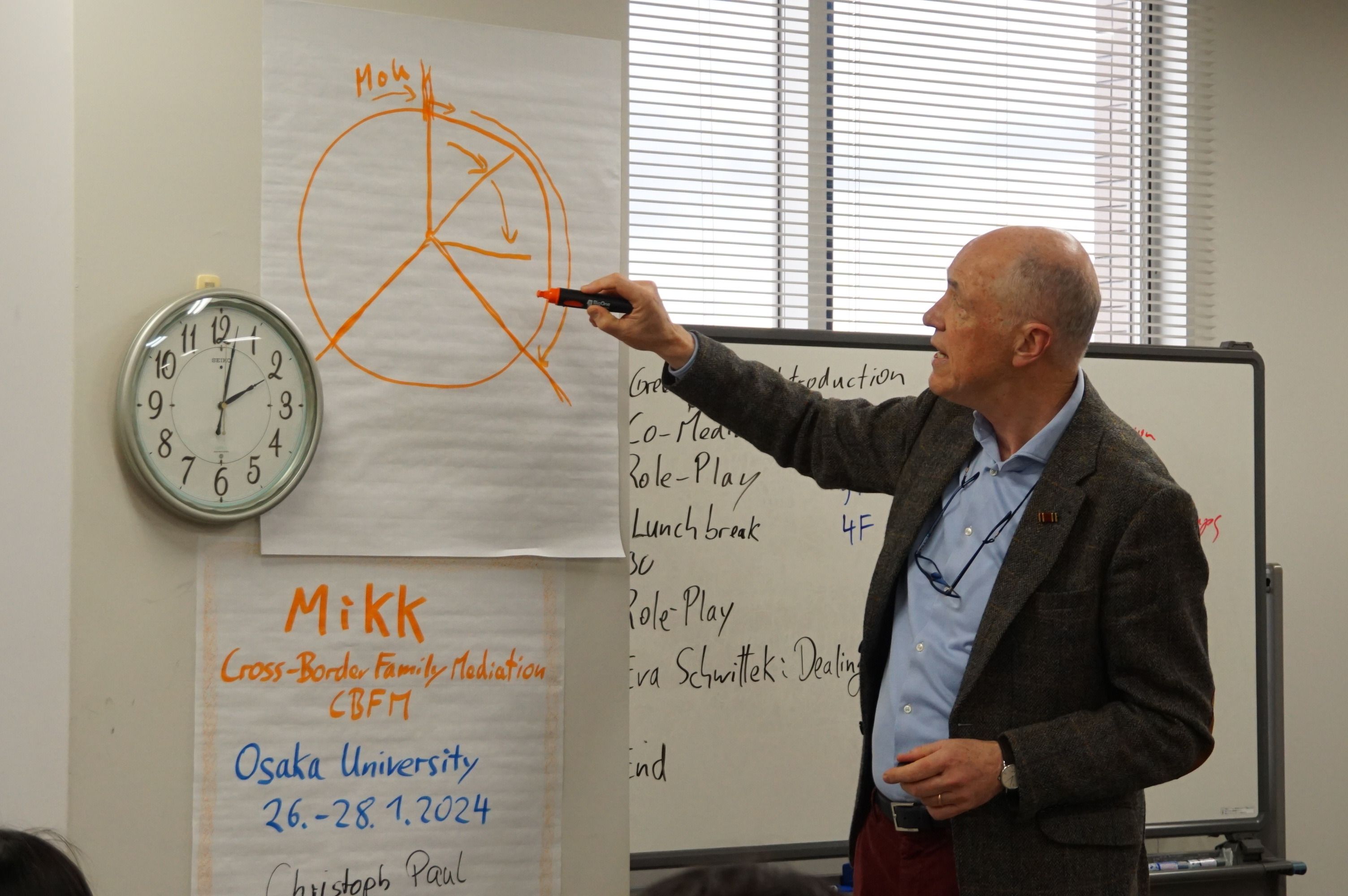
Christoph C. Paul at the MiKK seminar at Osaka University
MiKK seminar at Osaka University, 2024

Christoph C. Paul – retired lawyer and German notary, mediator since 1996.

Raised in a German-Norwegian family and rooted in Umbria, Italy, for more than 40 years – I am at home with international ties.

Recipient of the Cross of Merit on Ribbon of the Federal Republic of Germany, the Socrates Prize for Mediation and the WinWinno Innovation Prize.

Press coverage and interviews in Die Zeit, Der Tagesspiegel and Christ & Welt, among others (in German).

Introductory call

The introductory call – up to 20 minutes by phone or Zoom – is free. We use it to talk about whether mediation makes sense in your situation and how it would work.